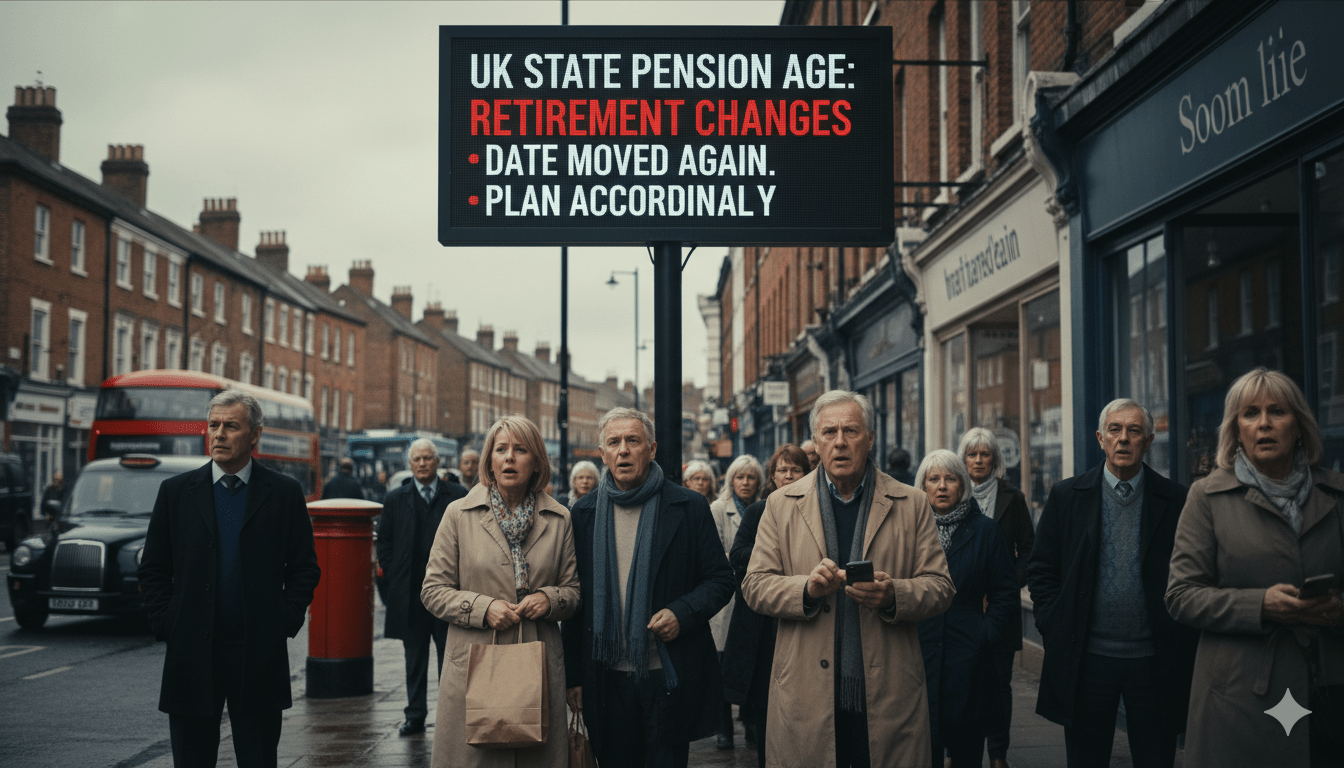
Planning for the future can feel like trying to hit a moving target. If you are living and working in the UK, one of the biggest “targets” is your retirement date. Recently, there have been several UK State Pension Age Retirement Changes that might affect when you can stop working and start enjoying your hard-earned benefits. As of March 2026, the rules are shifting from a standard age of 66 toward a new threshold of 67.
I remember talking to a neighbor recently who thought he could retire exactly on his 66th birthday this year. He was surprised to find out that because of his birth date, he actually has to wait a few extra months. This is why staying informed is so important. The government is adjusting these ages because we are generally living longer. While that is great news for our health, it means the pension system needs to be updated to stay fair and affordable for everyone.
Why the UK State Pension Age is Increasing
The main reason for the UK State Pension Age Retirement Changes is simple: sustainability. The Department for Work and Pensions (DWP) looks at how long people are living and how much money is in the “pot.” If we all live to be 90 but stop working at 60, the system would eventually run out of money. To prevent this, the government uses a “staged” increase.
These updates ensure that the State Pension remains a reliable safety net for future generations. By moving the age up slightly, the government can keep the “Triple Lock” promise, which helps your pension payments keep up with inflation or wage growth. It is a balancing act between giving you a good income and making sure the country can afford to pay it.
Biography Table: Key Figures and Impact
| Feature | Details |
| Current Standard Age | 66 years old (transitioning to 67) |
| Main Impact Group | Those born after April 1960 |
| Governing Body | Department for Work and Pensions (DWP) |
| Next Major Threshold | 67 years old (fully by 2028) |
| Legislated Future Rise | 68 years old (between 2044–2046) |
| Payment Increase Rule | Triple Lock (Higher of 2.5%, CPI, or Wages) |
The 2026 Shift: Moving from 66 to 67
If you were born between April 1960 and March 1961, you are in the “transition zone.” This is a core part of the uk state pension age retirement changes. Instead of everyone turning 67 at once, the DWP adds a few months to your wait time based on when you were born. For example, if you were born in June 1960, you might reach your pension age at 66 years and 3 months.
This phasing is designed to be gentler than a sudden jump. However, it still means you need to check your specific date carefully. March 2026 is a pivotal month because many workers are now seeing these “extra months” appear on their retirement forecasts. It is no longer a distant plan; it is happening right now for thousands of people across the country.
How Your Birth Date Affects Your Retirement
Your birth certificate is now the most important document for your financial planning. Under the uk state pension age retirement changes, your exact day and month of birth determine your “finish line.” For those born after April 1961, the math becomes easier again—your State Pension age will be 67. But for those born in the late 1960s, the “goalposts” are already being discussed for future shifts.
It is helpful to think of your retirement in two parts: your State Pension and your private savings. While the government might move the state age to 67, you can often access private pensions earlier, usually at 55 or 57. Understanding this gap is vital. If the uk state pension age retirement changes mean you have to wait longer for government money, you might need to lean on your private savings to bridge that time.
The Role of the Triple Lock in 2026
Even though the age is going up, the amount you receive is also changing. Thanks to the “Triple Lock,” the State Pension is set to rise in April 2026. This mechanism ensures that your weekly payment increases by the highest of three numbers: average earnings, inflation (CPI), or a flat 2.5%. For the 2026/27 tax year, the full new State Pension is expected to be around £241 per week.
This is a bit of “good news, bad news.” The bad news is you might have to wait an extra year to get it. The good news is that when you do, the payment will be higher than it was for people who retired five years ago. This helps protect your buying power so you can still afford the essentials, like heating and groceries, even as prices go up.
What Happens to Pension Credit Eligibility?
One hidden detail in the uk state pension age retirement changes is how it affects other benefits. Pension Credit is a “top-up” for people on low incomes. However, the age you can claim it is tied directly to the State Pension age. If the retirement age moves to 67, you cannot claim Pension Credit until you hit 67.
This can create a difficult “gap” for people who are unable to work due to health issues but aren’t yet old enough to be called “pensioners.” If you find yourself in this situation, you may need to look into other support like Universal Credit or Personal Independence Payments (PIP). It is always a good idea to speak with a benefits advisor if you think the age increase will leave you short on cash.
Future Outlook: Will the Age Rise to 68?
You might have heard rumors about the age rising to 68. Currently, the law says this will happen between 2044 and 2046. However, the government holds regular reviews to see if it should happen sooner. During the recent uk state pension age retirement changes discussions, some experts suggested moving the “68” target to the late 2030s.
For now, the government has decided to stick to the original plan. They have promised to give at least 10 years’ notice before making any major changes to the age 68 threshold. This means if you are currently in your late 50s, you likely don’t have to worry about the age 68 shift—but if you are in your 30s or 40s, you should definitely keep it in your long-term plan.
Impact on the Older Workforce in the UK
With the uk state pension age retirement changes, we are seeing more people in their late 60s staying in the workforce. This isn’t always a bad thing! Many people find that staying active and social at work helps them stay healthy. Plus, there is no “forced” retirement age in the UK anymore, so you can work as long as you want.
If you choose to work past your State Pension age, you can actually “defer” your pension. This means you tell the government to hold onto the money for a while. In exchange, they will give you a higher weekly payment when you finally do claim it. This is a great strategy if you are still healthy and don’t need the extra income right away.
Preparing Your Personal Retirement Strategy
Since the uk state pension age retirement changes are here to stay, the best thing you can do is take control of your own numbers. Start by getting a “State Pension Forecast” on the official GOV.UK website. This will tell you exactly how much you are on track to get and when you can start receiving it.
Don’t just rely on the government, though. Check your National Insurance (NI) record to see if you have any “gap” years. You usually need 35 qualifying years to get the full amount. If you have gaps, you might be able to pay voluntary contributions to fill them. Taking these small steps today can make a massive difference in how comfortable your life is ten or twenty years from now.
Conclusion: Staying Ahead of the Changes
The uk state pension age retirement changes are a reminder that the world is always evolving. While it might feel frustrating to see the retirement age climb, understanding the “why” and the “when” helps you prepare. Whether you plan to work longer, save more in a private pot, or retire abroad, knowledge is your best tool.
By staying updated on these DWP shifts, you can avoid surprises and build a future that feels secure. Remember, retirement isn’t just an age—it’s a financial status. The earlier you start planning for these shifts, the more choices you will have when you finally decide to hang up your hat.
Frequently Asked Questions (FAQs)
1. What is the current State Pension age in 2026?
The age is currently 66, but it is in the process of rising to 67. Depending on your birth date in 1960 or 1961, your specific age might be 66 and a few months.
2. How do I know my exact retirement date?
The best way is to use the official government State Pension calculator. You just enter your date of birth, and it gives you the exact day you can claim your money.
3. Can I still retire at 60 in the UK?
You can stop working whenever you like, but you won’t get your State Pension until you hit the official age. You would need to live off private savings or workplace pensions until then.
4. Will the retirement age go up to 70?
There are no current laws to move the age to 70. While some experts discuss it for the very distant future, the focus right now is the move to 67 and the eventual rise to 68 in the 2040s.
5. Do men and women have the same pension age?
Yes. Since 2018, the State Pension age has been equalized. Both men and women now follow the same rules and reaching ages for their retirement.
6. Does the age change affect my workplace pension?
Not necessarily. Most workplace pensions allow you to take money from age 55 (rising to 57 in 2028). However, always check with your specific pension provider to be sure.
Leave a Reply