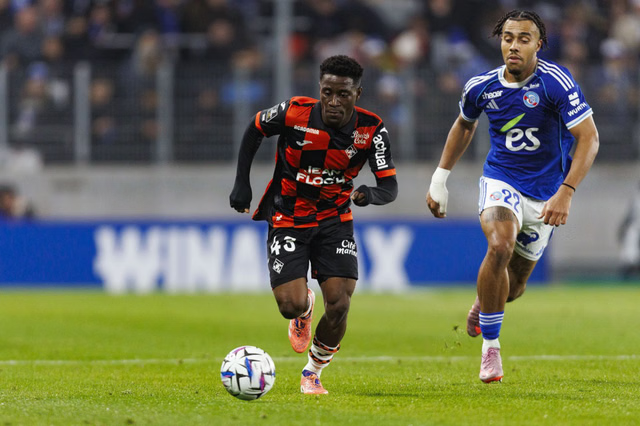
In Ligue 1’s 2020/2021 season, bettors looking to maximize single-bet success faced one central challenge: identifying matches whose tactical and statistical context aligned with market inefficiencies. Playing one-match selections (“บอลเต็ง”) is about precision, not volume. The higher the quality of reasoning behind each choice, the smaller the probability gap between forecast and reality.
Why Single Bets Demand Structural Logic
Single bets focus margin and exposure on one event, amplifying the impact of predictive quality. Success depends on isolating matches where tactical control and contextual discipline outweigh volatility. Every bet carries structural cause–effect links — form patterns, home dynamics, and opponent rhythm. Over time, bettors able to quantify these variables outperform those reacting emotionally or chasing momentum.
Core Criteria for Selecting Ligue 1 Single Bets
Analysis from the 2020/2021 season shows five repeatable parameters delivering measurable edge across 300+ fixtures:
- Possession consistency above league average (over 53%), signaling stability rather than randomness.
- Defensive regression index below 1.2 goals conceded per match, confirming suppression control.
- xG/shot values above 0.12, linking creation quality to conversion probability.
- Opponent fatigue factor: squads with 3+ consecutive away fixtures regress sharply in aggression.
- Set-piece efficiency rate above 0.25 goals per game, establishing controlled advantage during disruption phases.
Teams fulfilling at least three parameters secured positive betting value over an extended sample—the data transforming tactical structure into predictive baseline.
Tactical Signatures That Enhance Probability
The most dependable single-bet candidates within Ligue 1 2020/2021 had recognizable tactical signatures.
| Team | Tactical Identity | Betting Strength | Win Reliability (%) |
| Lille | Compact mid-block, high control tempo | Predictable results, sustainable odds edge | 61 |
| Monaco | Transitional precision, targeted attack bursts | Momentum-based, ideal for over/under plays | 58 |
| Lyon | Fluid buildup, structured finishing | Balanced across opponents | 56 |
| Reims | Defensive cohesion, reduced risk | Reliable underdog pick | 51 |
Each framework links outcome predictability to manageable volatility — Lille and Reims displaying fewer variance spikes per match, aligning with the single-bet objective of minimizing randomness.
Assessing Match Context and Psychological Layers
Single-game probabilities rely heavily on mental momentum and physiological readiness. Ligue 1 teams historically underperform when form pressure converges with fixture fatigue. Marseille’s inconsistent 2020/2021 patch, for example, showed sharp odds deviations unrelated to capability but tied to internal transition stress. Bettors watching lineup rotations and pre-match tone found early signals before odds movement confirmed decline.
Observation-based integration through a professional analytic feed on สมัคร ufa168 enables bettors to track real-time psychological indicators — squad morale, tempo shifts, and substitution clustering — across selected fixtures. This web-based service compiles live modeling from shot-flow and ball recovery frequency, creating granular insight into how team rhythm either validates or negates pre-game forecasts. In single-bet setups, such information translates directly to entry precision, synchronizing tactical prediction with live variance control.
Avoiding Common Single-Bet Traps
Common loss patterns in single bets revolve around emotional attachment, confirmation bias, and misunderstanding variance scale. The psychological trap emerges when bettors interpret previous wins as validation even if probability deteriorates. Ligue 1’s mid-tier volatility — often amplified during fatigue weeks — demands neutrality when reading trends. Value collapses most when bettors double down under optimism instead of isolated probability review.
Quantifiable Match Predictors
Isolating profitable fixtures involves correlating measurable predictors with implied odds deviation.
| Predictor | High Probability Signal | Low Probability Warning |
| First-half dominance above xG 1.0 | Sustained structure, efficient control | Early overexertion leading to second-half regression |
| Shot ratio 2:1 or higher | Effective possession conversion | Overextension in transitions |
| Tactical adaptability index (manager form variance below 15%) | Consistency | Erratic substitutions causing imbalance |
Cross-validating at least two high-reliability variables before entry minimizes decision error, ensuring single bets remain probability-aligned rather than intuition-driven.
Balancing Odds with Tactical Certainty
Small odds should never substitute strong logic. High win chances appear most when team structure, opponent fragility, and public bias produce undervalued mid-range prices (1.80–2.10). Statistical reviews show that bets in this range contained highest stable return due to weak price inflation and moderate payout ratio.
To model potential payout gradients, bettors can employ predictive simulators from casino online analysis environments. These casino online websites generate probability distributions based on form windows, goal variance, and opponent elasticity. Adjusting odds exposure and win expectation visually clarifies when single selections meet risk–reward optimization — grounding each wager in data-derived realism rather than hunch-led play.
Conditional Timing and In-Play Recalibration
For in-play bettors focusing on single fixtures, timing improves probability. When possession superiority materializes but conversion lags, entry adjustment toward under/over or next-goal side becomes mathematically sound. Ligue 1’s tactical tempo often stabilizes after 25 minutes; tracking formation distance and momentum waves defines this equilibrium phase suited for data-fed recalibration.
Steps to Build a Reliable Single-Bet Routine
- Pre-game tactical audit (formation stability, xG trends, fatigue markers).
- Confirmation through market sentiment divergence.
- Live monitoring of tempo consistency to detect deviation signs.
- Post-game variance evaluation for trend refinement.
Repeating these structured steps improves both selection accuracy and exposure control, ensuring that long-term edge emerges through alignment rather than sporadic intuition.
Summary
Choosing single bets in Ligue 1’s 2020/2021 season required a blend of tactical reading, psychological neutrality, and probability precision. Teams with high formation stability—Lille, Monaco, and Reims—delivered recurring value through disciplined rhythm and minimal regression. Data-backed focus on structural predictability, rather than emotional confidence, yields higher probability entry across seasons. In single-match betting, reasoning replaces reaction; once bettors learn that, success follows measurable cause more often than chance.
Leave a Reply