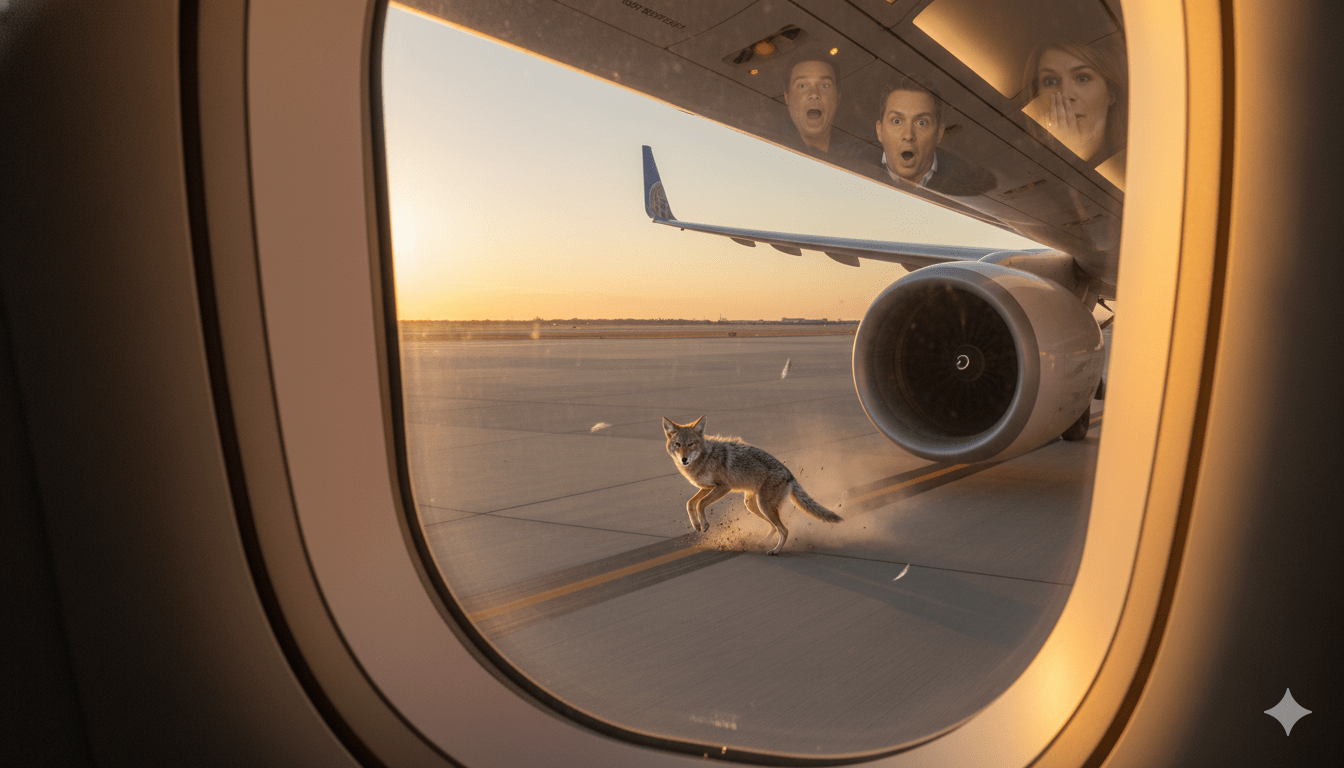
Imagine you are sitting on a plane, looking out the window as you get ready to take off. Suddenly, you feel a small bump. You might think it was just a pothole on the runway. However, sometimes it is something much more wild. Recently, a Coyote Strike United Airlines Flight incident caught the attention of travelers and safety experts alike. While we often hear about “bird strikes,” mammals like coyotes can also find their way onto airport grounds. It sounds like something out of a movie, but it is a real challenge that airports face every day to keep us safe.
When a coyote strike United Airlines flight occurs, the airline has to follow very strict rules. Pilots and ground crews are trained to handle these surprises with care. Even though Newark Liberty International Airport (EWR) is surrounded by cities, wildlife is surprisingly common. From birds to small mammals, these animals are always looking for a place to roam. This article will dive deep into how these incidents happen, what the airlines do next, and how airports work hard to keep the runways clear for your next vacation.
Event Summary: The Quick Facts
| Detail | Information |
| Incident Type | Wildlife Strike (Terrestrial Mammal) |
| Primary Airline | United Airlines |
| Airport Location | Newark Liberty International Airport (EWR) |
| Species Involved | Coyote (Canis latrans) |
| Safety Outcome | Aircraft landed safely; No passenger injuries |
| Reporting Agency | Federal Aviation Administration (FAA) |
Understanding the Coyote Strike United Airlines Flight Incident
A coyote strike United Airlines flight usually happens during the most critical times of a trip: takeoff or landing. Because coyotes are fast and smart, they sometimes sneak through fences. On the runway, a plane is moving at very high speeds. If a coyote crosses the path of a jet, there is very little time for anyone to react. This is why airport security doesn’t just watch for people; they also watch for animals.
In these specific cases, the pilot often reports a “thump” or sees the animal near the landing gear. Even if the plane seems fine, the crew must take it seriously. A coyote strike United Airlines flight requires a full inspection. Maintenance teams check the tires, the engines, and the underside of the plane. They want to make sure no small parts were damaged. Safety is the number one goal for United Airlines, so they never take a “wait and see” approach when wildlife is involved.
Why Do Animals Like Airports?
It might seem strange that a wild animal would want to live near loud planes. However, airports like Newark have huge open fields. These grassy areas are perfect for hunting mice and rabbits. To a coyote, an airport looks like a giant, quiet park with plenty of snacks. This leads to the occasional coyote strike United Airlines flight. The flat land also makes it easy for them to run, unaware that a massive Boeing or Airbus is headed their way.
The Role of the FAA in Wildlife Safety
The Federal Aviation Administration (FAA) keeps a giant list of every time an animal hits a plane. This is called the National Wildlife Strike Database. When a coyote strike United Airlines flight is reported, it helps the FAA understand patterns. If they see too many coyotes at one airport, they tell the airport to fix their fences or move the animals. This data is very important for making flying safer for everyone across the country.
How Pilots Respond to a Strike
If a coyote strike United Airlines flight happens during takeoff, the pilot has to make a split-second choice. If they are moving fast enough, they will continue into the air and then circle back to land. This is often safer than slamming on the brakes. The pilots stay very calm. they talk to Air Traffic Control and let them know exactly what happened. Their training allows them to land the plane gently, even if they are worried about damage.
Airport Wildlife Management Teams
Did you know airports have “wildlife patrols”? These are experts who drive around the runways to scare animals away. After a coyote strike United Airlines flight, these teams go into high gear. They might use loud noises, lights, or even specially trained dogs to keep coyotes away from the planes. It is a constant game of cat and mouse—or in this case, plane and coyote—to ensure the environment is secure.
The Engineering Behind Plane Safety
Modern airplanes are built to be incredibly tough. While a coyote strike United Airlines flight sounds scary, the planes are designed to handle impacts. Engineers test engines by tossing objects into them to make sure they won’t fail. While a coyote is much larger than a bird, the landing gear and the fuselage are made of strong metals and composites. This engineering is why passengers rarely feel more than a slight jolt during such an event.
Impact on Flight Schedules and Delays
Safety checks take time. If your plane is involved in a coyote strike United Airlines flight, you might experience a delay. The airline has to swap the plane or wait for a mechanic to sign off on the repairs. While waiting in the terminal is boring, it is much better than flying on a plane that hasn’t been checked. United Airlines usually works fast to get passengers onto new flights so their travel plans stay on track.
Comparing Bird Strikes and Mammal Strikes
Most people have heard of the “Miracle on the Hudson,” which was a bird strike. However, a coyote strike United Airlines flight is different because it happens on the ground. Birds hit the windshield or the engines mid-air. Coyotes usually hit the wheels. Both are dangerous, but mammal strikes are much rarer. Only about 2% of all wildlife strikes involve land animals like deer or coyotes, making these events quite unique.
The Cost of Wildlife Strikes to Airlines
Wildlife damage costs the aviation industry millions of dollars every year. A coyote strike United Airlines flight can lead to expensive repairs for damaged sensors or tires. There is also the cost of fuel for planes that have to return to the airport. By investing in better fences and patrol teams, airlines and airports save money in the long run. Most importantly, they prevent accidents before they can even start.
Future Technology to Prevent Strikes
In the future, we might see even cooler ways to stop a coyote strike United Airlines flight. Some airports are testing “AI cameras” that can spot an animal from miles away. These cameras can send a signal to a patrol car instantly. There are also new types of radar that can track movement on the ground. As technology gets better, the chance of a plane meeting a coyote will get smaller and smaller.
Conclusion: Safety First on the Runway
At the end of the day, a coyote strike United Airlines flight is a reminder of how nature and technology sometimes clash. Thanks to brave pilots, smart engineers, and hardworking airport crews, these incidents almost always end safely. The next time you take off from Newark or any other airport, you can feel good knowing there are teams of people (and maybe some high-tech tools) watching the grass to make sure your path is clear. Safe travels!
Frequently Asked Questions
1. Is a coyote strike United Airlines flight common?
No, mammal strikes are very rare. Most wildlife incidents involve birds. Airports have many tools to keep land animals away from the runways.
2. Can a coyote cause a plane to crash?
While any impact is serious, planes are built to be very strong. A coyote strike United Airlines flight usually results in minor damage to the landing gear or tires, not a crash.
3. What happens to the passengers after a strike?
Usually, the plane lands safely, and passengers are moved to a different flight. The airline makes sure everyone is safe and taken care of while the plane is inspected.
4. Do airports have fences to stop coyotes?
Yes, airports use tall, strong fences. However, coyotes are very good at digging or finding small gaps, which is why patrols are also necessary.
5. How does the pilot know they hit something?
Pilots may hear a noise, feel a vibration, or see the animal. Ground crews and Air Traffic Control also watch the runways closely to spot any issues.
6. Does United Airlines have special rules for wildlife?
Yes, all airlines follow FAA rules. Any coyote strike United Airlines flight must be reported and the aircraft must be checked by a certified mechanic before it flies again.
Leave a Reply