In today’s data-driven landscape, the ability to analyze and present information effectively has become a critical skill across industries. Organizations rely on data to guide decisions, optimize operations, and identify new opportunities. However, raw data alone is often difficult to interpret. Without proper visualization, even the most valuable datasets can fail to deliver meaningful insights. This is where bar charts continue to play a vital role.
Bar charts are one of the most widely used forms of data visualization, and for good reason. Their structure is simple, intuitive, and highly effective for comparing values across categories. Each bar represents a specific category, and its height or length corresponds to a numerical value. This straightforward design allows users to quickly identify differences, trends, and patterns without needing advanced analytical skills.
Despite their simplicity, bar charts are incredibly powerful. They can be used to analyze a wide range of data, from business performance metrics to survey results and financial reports. For example, a company might use bar charts to compare sales across different regions, track monthly revenue, or evaluate the performance of various products. In each case, the visualization helps transform raw numbers into clear and actionable insights.
Traditionally, creating bar charts involved using spreadsheet software or specialized tools. While these methods are still widely used, they often require multiple steps, including data formatting, chart selection, and manual adjustments. For users who need to generate charts frequently, this process can become time-consuming and inefficient. Additionally, minor errors in formatting or configuration can lead to misleading visualizations.
Modern tools have significantly improved this process. A bar chart maker allows users to create charts quickly and with minimal effort. By simply inputting data—either manually or through file uploads—users can generate a visual representation within seconds. This streamlined workflow reduces complexity and allows users to focus on analysis rather than technical details.
One of the key advantages of using a dedicated bar chart tool is speed. In fast-paced environments, timely insights are essential. The ability to generate charts instantly enables users to respond quickly to new data and make informed decisions without delay. This is particularly valuable in areas such as marketing, sales, and operations, where conditions can change rapidly.
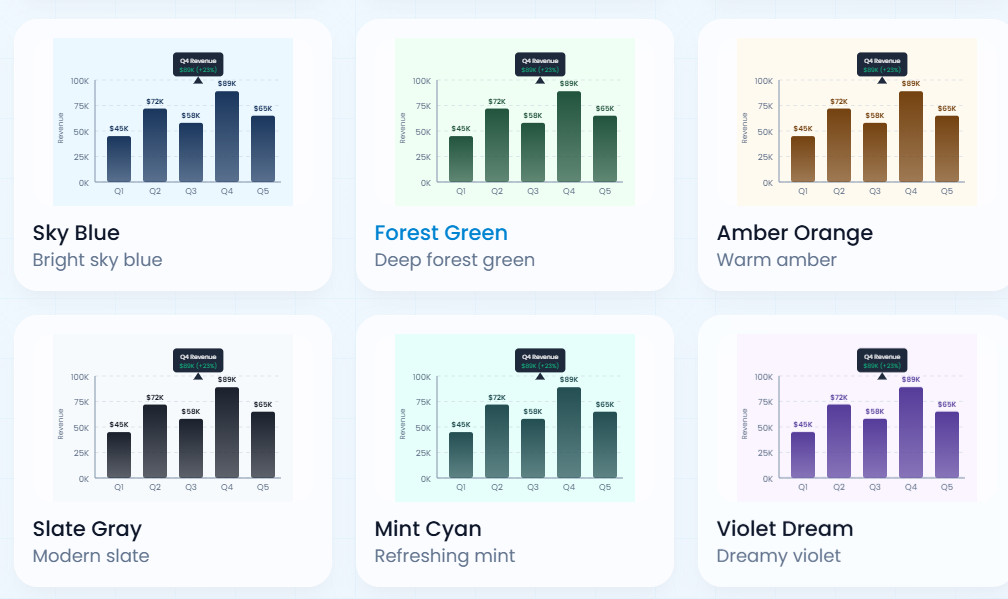
Customization is another important feature. A good bar chart maker provides options to adjust colors, labels, scales, and formatting. These features allow users to tailor their charts to specific audiences and purposes. For instance, a chart designed for internal analysis might prioritize detail, while one intended for presentation might focus on clarity and visual impact. The ability to customize ensures that the visualization effectively communicates the intended message.
Accessibility is also a major factor driving the adoption of modern tools. Many bar chart platforms are web-based, meaning they can be accessed from any device with an internet connection. This eliminates the need for software installation and ensures compatibility across different systems. For remote teams and distributed organizations, this flexibility is especially beneficial.
Collaboration has become increasingly important in data-driven workflows, and bar chart tools support this need effectively. Many platforms allow users to share charts بسهولة through links or export them as images and documents. This makes it easier to communicate insights with colleagues, clients, or stakeholders, ensuring that everyone has access to the same information.
From an industry perspective, the applications of bar charts are extensive. In finance, they are used to track revenue, expenses, and investment performance. In marketing, they help analyze campaign effectiveness and customer engagement. In education, they support learning by making data more accessible and understandable. Their versatility makes them an essential tool across virtually every field.
Another important strength of bar charts is their clarity. Unlike more complex visualizations, bar charts are easy to interpret at a glance. This makes them particularly effective for communicating insights to audiences who may not have a technical background. When presenting data to decision-makers, clarity and simplicity are often more valuable than complexity.
Bar charts also play a role in identifying trends over time. By comparing values across different periods, users can observe growth, decline, or stability. This helps organizations track progress and evaluate the impact of their strategies. When combined with other analytical tools, bar charts can provide a comprehensive view of performance.
Scalability is another key consideration. As datasets grow larger, the need for efficient visualization tools becomes more important. Modern bar chart tools are designed to handle large volumes of data without compromising performance. This ensures that users can continue to generate accurate and reliable visualizations as their data needs evolve.
Ultimately, the value of bar charts lies in their ability to simplify complex information. They transform raw data into visual insights that are easy to understand, compare, and act upon. By reducing cognitive load, they enable users to focus on what matters most—making informed decisions.
In conclusion, bar charts remain a fundamental tool in modern data analysis. With the support of tools like a bar chart maker, users can create clear, accurate, and impactful visualizations quickly and efficiently. As data continues to shape the way we work and make decisions, the importance of effective visualization tools will only continue to grow.