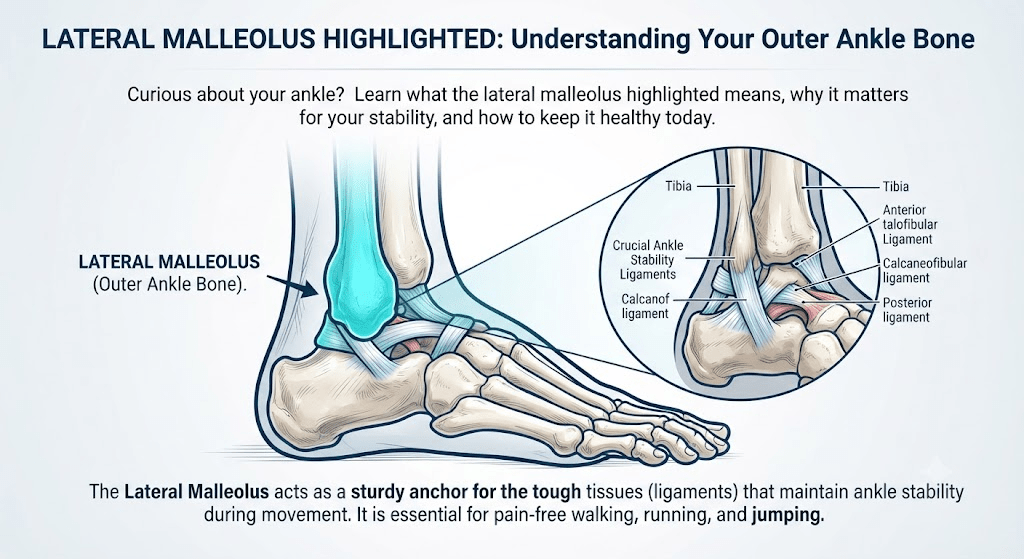
Have you ever looked at an X-ray or a medical diagram and seen a part called the Lateral Malleolus Highlighted? It might look like just a small bone bump on the outside of your ankle. However, this tiny piece of your skeleton is actually a huge hero for your body. It acts like a sturdy anchor for the tough tissues that keep your ankle stable when you walk, run, or jump. Understanding this bone helps you appreciate how your legs move every single day. Let’s dive into what this part does and why it is so important for keeping you moving pain-free.
What Exactly Is the Lateral Malleolus?
The lateral malleolus is the bony knob you can feel on the outer side of your ankle. It is actually the very end of your fibula, which is the thinner bone in your lower leg. When doctors look at imaging and have the lateral malleolus highlighted, they are checking how this bone connects to your foot. This spot is a major meeting point for many important parts of your body. Without this strong bony bump, your ankle would not have the right shape or support. It plays a big role in keeping your entire foot connected correctly to your leg.
Why Do Doctors Look Closely at This Bone?
When you have ankle pain, a doctor often needs to see your lateral malleolus highlighted on an X-ray. This helps them look for small cracks or signs of stress after a fall or a twist. Because this bone sits right under the skin, it is quite easy to bump or hurt. By looking at this area closely, doctors can tell if you just have a simple bruise or something more serious. Having the lateral malleolus highlighted clearly helps them make the right plan to get you back on your feet quickly. It is a vital step in getting the best care.
How This Bone Keeps You Stable
Think of the lateral malleolus as a gatekeeper for your ankle stability. It helps keep your foot from rolling too far to the side when you step on uneven ground. When you see the lateral malleolus highlighted in a diagram, notice how it acts like a pulley for the tendons. These tendons glide around the bone to help you flex your foot properly. This constant support is exactly what allows you to hike, play sports, or just walk to the store without losing your balance. It is a small part with a very big job.
Common Injuries in the Outer Ankle
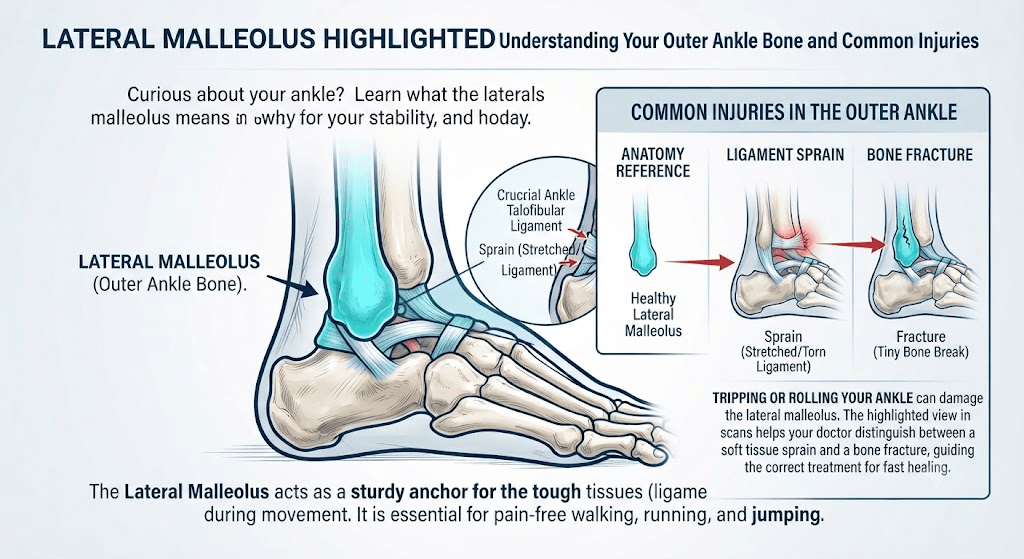
Because the outer ankle is so active, it is prone to a few common issues. If you trip and roll your ankle, the lateral malleolus is often the spot that takes the most pressure. Sometimes, the ligaments attached to it get stretched too far, which we call a sprain. Other times, the bone itself might get a tiny fracture if the hit is very hard. Seeing the lateral malleolus highlighted in a scan allows your doctor to see exactly where the trouble is. Knowing the difference between a simple strain and a bone injury is key to fast healing.
Understanding Ankle Sprains and the Bone
Ankle sprains are very common, especially if you are an active person who loves sports. When you sprain your ankle, the ligaments near the lateral malleolus are usually the ones that get hurt. If you look at an image with the lateral malleolus highlighted, you can see how close those ligaments sit to the bone. Because the bone is right there, any swelling in the area can make it hard to tell what is hurt. This is why doctors almost always use imaging to check the bone’s health when you have a painful, swollen ankle.
Signs You Should See a Doctor
If you have hurt your ankle, watch for a few important warning signs. If you cannot put any weight on your foot, or if the pain is very sharp near that bony bump, it is time to see a pro. Seeing the lateral malleolus highlighted by a doctor is the only way to be sure if you have a break. Don’t try to guess on your own, as these injuries need the right rest to heal up. A quick visit to a clinic can save you from long-term trouble with your balance or walking.
How Imaging Helps Your Recovery
Modern technology makes it easy to see the lateral malleolus highlighted in great detail. Tools like X-rays, MRI scans, or CT scans show the bone from many different angles. This gives your doctor a “map” of your ankle so they know exactly how to treat you. When the lateral malleolus highlighted is shown on these scans, it takes the guesswork out of your recovery process. You get a clear answer, and you can start a physical therapy plan that is custom-made for your specific needs. It really speeds up your healing journey.
Tips for Keeping Your Ankles Strong
The best way to take care of your lateral malleolus is to keep your ankles strong and flexible. Simple balance exercises, like standing on one leg while brushing your teeth, can make a huge difference. You can also do ankle circles to keep the joints loose and healthy. When you keep the muscles around the lateral malleolus strong, they protect the bone from accidental bumps and twists. It is like giving your ankles a suit of armor. Staying active and moving your body correctly is the best medicine for long-term health.
Why Proper Footwear Matters
Your shoes are the first line of defense for your lateral malleolus. If your shoes are worn out or do not fit right, your ankle has to work much harder to keep you steady. When you wear shoes with good support, the stress on your lateral malleolus is reduced significantly. If you see your lateral malleolus highlighted in a shoe-fitting diagram, you will notice how the shoe cradles that spot. Always choose shoes that feel good and support your arch. Your ankles will definitely thank you for making such a simple, smart choice every day.
Rest and Recovery Techniques
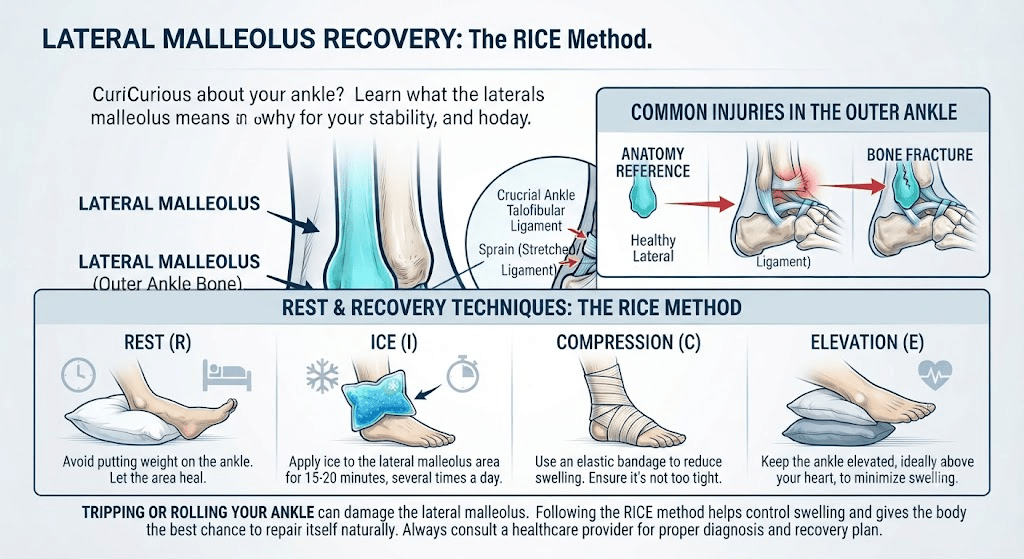
If you do happen to hurt your outer ankle, the “RICE” method is your best friend. Rest, Ice, Compression, and Elevation are the gold standard for quick healing. You want to keep swelling down so that the area around your lateral malleolus stays calm. When you have the lateral malleolus highlighted in your mind as the “center of the injury,” you know where to focus your ice pack. By following these easy steps, you give your body the best chance to repair itself naturally. Always listen to your body and give it time.
Frequently Asked Questions
Is the lateral malleolus the same as the ankle bone?
Yes, it is the specific bony knob on the outside of your ankle. Many people just call it the “ankle bone,” but its medical name is the lateral malleolus.
Why does my lateral malleolus feel sore?
Soreness can come from a sprain, overuse, or shoes that are too tight. If the pain stays for a long time, it is best to see a doctor for a check-up.
Can a broken lateral malleolus heal on its own?
Small stress cracks might heal with rest, but a true break needs a doctor’s help. They need to make sure the bone heals in the right position.
How do I strengthen my ankle?
You can use balance boards, resistance bands, or simple calf raises. These exercises help protect the lateral malleolus by keeping the surrounding muscles and tendons strong.
Does the lateral malleolus have a twin?
Yes! The medial malleolus is the bony bump on the inside of your ankle. Together, they act like a clamp that holds your foot in place.
What is the difference between a sprain and a fracture here?
A sprain is an injury to the soft tissues like ligaments. A fracture is a crack or break in the bone itself. Both often show similar pain near the lateral malleolus.
Conclusion
Taking care of your body starts with understanding how the pieces fit together. That small bump on your outer ankle, the lateral malleolus, is a key part of your ability to walk and stay balanced. By knowing what the lateral malleolus highlighted truly means for your health, you can make better choices for your feet every single day. Whether it is wearing better shoes or doing simple balance drills, your effort pays off. Keep your ankles strong, stay active, and don’t hesitate to reach out to a professional if you feel pain. Your mobility is your freedom—protect it.
Leave a Reply