I went back and forth on this for weeks before my first Big Island trip.
Hilo made obvious sense. It’s a real city. Farmers markets, restaurants, a waterfront, actual grocery stores. You can fly in, drop your bags, and immediately feel like you’re somewhere with infrastructure. Volcano Village, on the other hand, barely shows up on the map at scale. A few streets, a handful of cafés, and a lot of trees.
I chose Volcano Village. And after five days, I understood why so many people who come to this part of the island end up making the same call.
What Hilo Actually Offers (and What It Doesn’t)
Hilo has genuine charm. I want to say that clearly, because this isn’t an argument against the city. The downtown is walkable and a little funky, with old storefronts and a harbor that looks like it belongs in a different era entirely. The Hilo Farmers Market runs several days a week and is absolutely worth a morning if you’re anywhere nearby. The food scene is better than people expect.
But here’s the thing: Hilo is about 45 minutes from Hawaiʻi Volcanoes National Park. That doesn’t sound like much until you’re doing it twice in a day, which, if you’re serious about the park, you will be. Early morning at the crater before the crowds. Back for lunch. Out again at dusk for the lava glow. That’s a lot of driving on winding roads in the dark, and after a couple of days it starts to wear on you.
Hilo also sits at sea level, which means it’s warm and humid in a way that can feel heavy after a while. If you’re coming from somewhere hot, that might not bother you. If you’re hoping for the cooler, mistier Big Island experience, you won’t quite find it there.
So, practically speaking, Hilo works better as a day trip than a home base for park visitors.
Why Volcano Village Changes the Equation
Volcano Village sits at roughly 3,800 feet. The air is different up there. Cooler, cleaner, with a dampness that smells like rain even when it isn’t raining.
The village itself is small, but it has what you actually need. A couple of good cafés, a local market, a gas station, a Thai restaurant that people drive up from Hilo specifically to visit. It’s not a place where you’ll be bored in the evenings, but it’s also not a place with a bar district or a hotel corridor lined with chain restaurants. If that trade-off suits you, it suits you well.
The real advantage is proximity. Staying in Volcano Village means you’re minutes from the park entrance. You can be at the Kīlauea Overlook before the first tour buses arrive. You can drive back to your rental for lunch, rest for an hour on the lanai, and head back out for the sunset without it feeling like a logistical event. That kind of access changes how you experience the park entirely. It goes from a destination you visit to something you’re actually living alongside for a few days.
The Accommodation Difference
This is where the comparison gets more specific.
Hilo has hotels, a few boutique inns, and some vacation rentals scattered around the city. Perfectly serviceable options, especially if you’re splitting time between the Hilo coast, Rainbow Falls, and the botanical gardens. But nothing that puts you inside the ecosystem of the volcano the way Volcano Village rentals do.
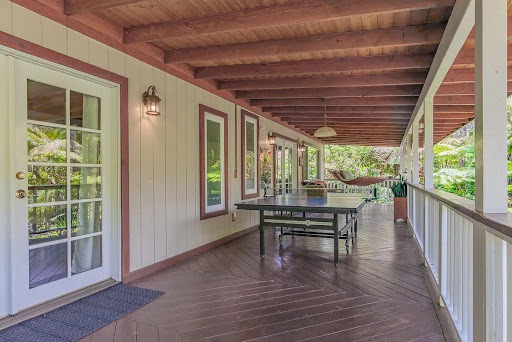
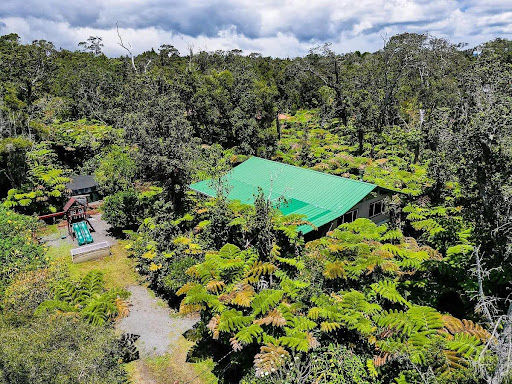
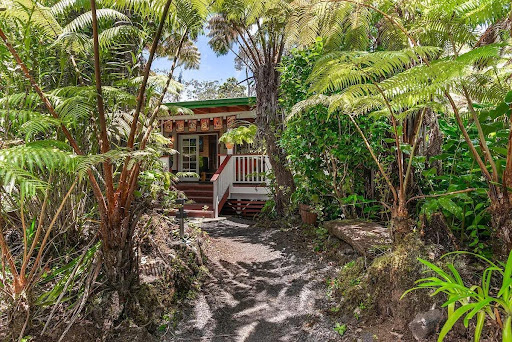
In Volcano Village, the better vacation rentals near Hawaiʻi Volcanoes National Park are actual homes surrounded by rainforest. Places like Aloha Hale on Haunani Street, a three-bedroom, two-bathroom house with a private lanai facing the trees. 1,290 square feet, solid and quiet, built in a way that makes you feel genuinely settled rather than passing through. You wake up and the forest is already there, right outside the window, before you’ve had coffee.
That experience simply doesn’t exist in Hilo. It’s a city. Cities have their own version of good, but immersive rainforest quiet isn’t it.
For families especially, this distinction matters. Having three bedrooms, a proper kitchen, ample parking, and the ability to come and go on your own schedule, without coordinating around hotel check-in windows or restaurant hours, makes the trip feel easier. Less managed. More like yours.
Who Should Actually Stay in Hilo
Hilo makes more sense if your Big Island itinerary spreads across the east side broadly. If you’re planning to spend significant time at Akaka Falls, along the Hamakua Coast, or exploring the Puna district, Hilo is a more central base. It’s also a better fit if you’re traveling without a car and need walkable access to food and services.
And if you’ve already done the volcano deeply on a previous trip and want a more urban, food-focused Big Island experience, Hilo delivers that well.
But for a first visit. For anyone who came specifically because of the park. For anyone who wants to understand what it actually feels like to live inside a Hawaiian rainforest for a few days, even briefly. Volcano Village wins without much of a contest.
Making the Decision
Here’s what I’d suggest. Look at your itinerary honestly. Count the number of days you plan to spend in or near the national park. If that number is three or more, base yourself in Volcano. Do a day trip to Hilo for the farmers market and the harbor. That way you get both, and you’re not spending your park days in the car.
If you land on Volcano Village, Aloha Hale is worth a direct look. You can check availability at volcanohi.com or call 1-808-623-6100. It books out, especially around holiday periods, so earlier is better.
Either way, the Big Island will take care of the rest.
Leave a Reply